Thursday, 8 October 2015

SSB SPECIAL: INDIA'S NEED OF ANTI-MISSILE SHIELD


In Chandipur, Odisha, the DefenceR&D Organisation (DRDO) will test-fire an interceptor missile, whose task is to hit an incoming ballistic missile target, in this case a Prithvi missile fired a few minutes earlier. The test is akin to striking a bullet with a bullet.

This will be DRDO's latest test towards developing an
anti-ballistic missile (ABM) shield, to protect Indian targets against nuclear-tipped ballistic missiles fired from Pakistanor China.

In 2011, former 
DRDO chief Avinash Chander had told Business Standard that an ABM shield would protect thenational capital within three years ('Delhi could have anti-missile shield by 2014', August 29, 2011).

However, the shield's components are still being refined, and the government is not likely to sanction operational deployment of what will be a highly controversial measure until after the shield is fully tested.

An ABM shield is controversial because it destabilises nuclear deterrence, encouraging a country to believe it can launch a nuclear strike while successfully defending itself against retaliation. At the height of the Cold War, the US and the Soviet Union signed an Anti-Ballistic Missile Treaty severely restricting defensive measures on both sides, to preclude this.

Pakistan believes its arsenal of about 100-120 nuclear warheads, and the missiles, aircraft and other means to deliver them, are sufficient to deter India's military. Were India to protect cities such as Delhi and Mumbai with ABM shields, the Pakistan Army would almost certainly build more nukes and plan to fire a larger number at defended cities, to saturate and overwhelm their ABM defences.

An ABM shield has three functional components: First, a radar network that detects enemy ballistic missiles soon after they are launched, and then tracks them along their flight path. The range of a ground-based radar is limited by the earth's curvature, while a satellite-based radar picks up a missile as soon as it is fired. The second component is a command and control system that plots and predicts the enemy missile's flight path, and assigns interceptor missiles to destroy the intruding missile. Third, the ABM shield has interceptor missiles that a "guidance radar" guides onto the incoming enemy missile, destroying it before its nuclear warhead can do any damage.

Given the proximity of India and Pakistan, the entire engagement timeframe, from launch to interception, is between 5 and 10 minutes.

The interceptor missiles are still being refined before being produced in large numbers for deployment. DRDO sources say Monday's test is a part of this. They are of two kinds: An exo-atmospheric missile, called the Pradyumna, which intercepts the enemy missile while it is still in space, i.e., at heights of above 50 kilometres. As a back-up, an endo-atmospheric missile, called the Ashvin, is launched to strike the incoming missile in the upper atmosphere, i.e., at altitudes of 20-40 kilometres.

While interceptor development continues, two Long Range Tracking Radars (LRTRs) - built by the DRDO and Israeli company, ELTA, and with ranges of 800-1,000 kilometres - were moved to Delhi a year ago, where they are being integrated into the Indian Air Force (IAF) surveillance network.

Even so, while the LRTR is currently undergoing testing as part of the IAF network, experts say it could eventually form part of an ABM shield.

DRDO sources say that satellite surveillance is not yet part of the ABM shield. The range from which an incoming missile is fired is a key determinant of whether it can be intercepted successfully. The further its origin, the higher and faster it must go, and the more difficult it is to shoot it down. Currently, the Pradyumna and Ashvin have proven they can strike missiles fired from up to 900-1,000 kilometres away.

Pakistan's longest-range missile, the Shaheen III, which can travel 2,750 kilometres, cannot be used against, say, New Delhi, which is barely 700 kilometres from Pakistan. To avoid overshooting Delhi, Pakistan would have to use its shorter range Abdali I and Shaheen I missiles.

Lieutenant General (Retired) Khalid Kidwai, the advisor to Pakistan's National Command Authority and for 15 years that country's nuclear czar, told the Carnegie Endowment for International Peace on March 23 that the Shaheen III missile was developed to bring the Andaman & Nicobar Islands into range and prevent India from basing nuclear weapons there.

However, 
China targets India with the advanced, solid-fuel Dong Feng-21 (NATO designation: CSS-5) medium range ballistic missile (IRBM), which has a range of 1,700-2,000 kilometres. India's current ABM shield would be unable to intercept an incoming DF-21.


Monday, 17 August 2015

SSB SPECIAL: INDIA IN BRICS SUMMIT 2015

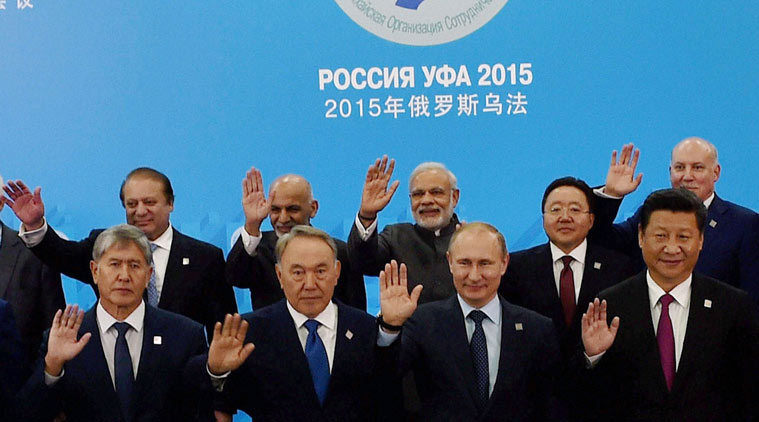
 BRICS is an international organisation which started early in the year of 2008 immediately after the global financial crisis and after the international monetary organisation changed its policies for the developed nations like USA as this policy was not favouring the emergence of the developing countries like INDIA CHINA etc. BRICS is the acronym for an association of five major emerging national economies: Brazil, Russia, India, China and South Africa. this organisation started with initially with four countries i.e;  Brazil, Russia, India, China and was known as known as BRIC. South Africa joined this league in the year of 2010. Russia currently holds the chair of the BRICS group, and hosted the group's seventh summit in July 2015.As of 2015, the five BRICS countries represent over 3 billion people, or 42% of the world population; as all five members are in the top 25 of the world by population, and four are in the top 10. The five nations have a combined nominal GDP of US$16.039 trillion, equivalent to approximately 20% of the gross world product, and an estimated US$4 trillion in combined foreign reserves.The BRICS have received both praise and criticism from numerous commentators.[Bilateral relations among BRICS nations have mainly been conducted on the basis of non-interference, equality, and mutual benefit (win-win). It is estimated that the combined GDP (PPP) of BRICS would reach US$50 trillion mark by 2020.the seventh BRICS summit was held at UFA in RUSSIA which was attended by the representatives from all the brics nations i.e; country representative 

                      BRAZIL                               -                         Dilma Vana Rousseff

                     RUSSIA                                -                          VLADIMIR PUTIN

                     INDIA                                   -                           NARENDRA DAMODAR DAS MODI

                    CHINA                                  -                            XI JINPINGS

                    SOUTH AFRICA                    -                           JACOB ZUMA

SOME of the highlights of the BRICS summit 2015 are as follows:


1. The decisions over the national  development bank was taken at the 6th BRICS summit at Fortaleza in       Brazil in 2014 and therefore in the 7 th BRICS summit it has been ratified by aal the members selecting    SHANGHAI as the bank headquarter and india got the opportunity to nominate its first chief so K V           KAMATH former chairman of Infosys India ltd.
2. The objectives of this bank were made clear that the prime objectives of this bank will be                         the infrastructural development and the limit of this would be $ 34 bn annually
3. All the five members state to contribute $ 10 bn each to accumulate a capital of $ 50 bn, initially this        would be increased to $ 100 bn over a period of time. Any member cannot increase its share capital          without the consent of balance four members. this issue was raised by India which was accepted by        all   the other members.
4. Bank would provide monetary assistance to other countries suffering from economic volatility $ 10bn       will be paid in capital ( $ 2bn from each member) and $ 40bn to be paid upon request.
5. Any country can become the members of this NDB but the share of the brics nation would not downfall     by 55%. the bank would start lending from 2016.

UFA declaration:-


1. Members nation to step up coordinated efforts in responding to emerging challenges ensuring peace       and security promoting development in a suitable way.
2.There is a need to bring reform in UNSC was highlighted. china and Russia supported BRAZIL,                 INDIA, and SOUTH AFRICA aspiration to play a greater role in the UN.
3. BRICS nation called the US to ratify the IMF 2010 Reform package by mid September 2015
4. BRICS members decided to create a BRICS working group on anti-corruption cooperation to come into     effect by November 2015
5. MoU on the creation of joint BRICS website was decided
6. BRICS minister of labor and employment will be held in Feb 2016 which will focus on the creation of       the decent jobs and information sharing on labor and employment issues.
BRICS summit was concluded on 9 july with a promise to meet again in 2016 in INDIA.

Tuesday, 21 July 2015

SSB SPECIAL: BENEFITS OF INDIA AS A SCO MEMBER


The decision to include India, along with Pakistan, as permanent members of the Shanghai Cooperation Organisation (SCO) has been announced during the SCO Summit (9-10 July) at Ufa, Russia. The process for formal inclusion into SCO will take place in 2016.
SCO has China, Russia, Kyrgyzstan, Kazakhstan, Tajikistan and Uzbekistan as permanent members, while India, Pakistan, Iran, Afghanistan, and Mongolia have held ‘Observer’ status. Countries included as ‘Dialogue Partners’ are Turkey, Belarus and Sri Lanka.
The growing political and trade significance of SCO can be judged by the fact that despite being a member of NATO, Turkey is willing to hedge its bets with SCO and may join it as a permanent member in future.
All six original members of SCO have common concerns on extremism, terrorism and separatism and have jointly committed themselves to supporting each other in fighting this growing threat. Increasing cooperation between member countries on intelligence sharing, counter terrorism and joint military training is contributing to regional stability and enhancing the role and influence of SCO in international affairs.
Today, SCO has deepened its engagement with the UN and holds Observer status at the General Assembly, European Union, Commonwealth of Independent States, Organisation of Islamic Cooperation and ASEAN.
With both India and Pakistan joining SCO in 2016, the organisation is set to emerge even stronger. This global entity has the potential to change the regional trade and economic dynamics significantly.
India is on its way to emerging as a significant economic and military power in the next decade. In the aftermath of World War II, India positioned itself as a Non-aligned nation that preferred not to join the US-dominated NATO or the former USSR-led Warsaw Pact, and instead chose to hold an independent political stance in international affairs. India and other like-minded nations, which included former Yugoslavia, Indonesia, Egypt and Ghana, chose to create a third platform, the Non Aligned Movement (NAM).
With time and changing international order in the post-Cold War period, NAM, along with the Commonwealth of Nations, has lost its political influence and relevance. With SCO now emerging as a strong body, nations like Iran, Turkey and Sri Lanka are keen to explore the benefits of joining the organisation.

An Opportunity to Resolve Border Disputes

India has had to contend with border disputes with China and Pakistan, both of which have had long standing close ties. This has had an impeding influence for India in strengthening its economic ties with countries in Central Asia. India has been seeking to enhance its energy security and increase in trade, by opening up new transit routes to Central Asian countries.
While India has taken the initiative in settling the border dispute with Bangladesh, the recent decision to open transit facility for free movement goods between India, Bangladesh, Nepal and Bhutan is likely to see all stakeholder nations benefiting from the enhanced regional trade.
The ongoing conflict in Afghanistan and freeze in dialogue between Pakistan and India, have come in the way of developing the South Asian cooperation that can significantly improve the economic situation in not just Pakistan and India, but in all SAARC countries.

Stalled Multilateral Projects Can Get Going

For several years now, the Iran-Pakistan-India oil pipeline has been in discussion but no progress has been made on account of security concerns. Similarly, the proposed project between Turkmenistan, Afghanistan, Pakistan and India has been stalled. With both Pakistan and India now joining SCO, it is very likely that either or both projects may finally take off. Both projects have the potential to significantly enhance the energy scenario in the region, while boosting regional cooperation and trade between stakeholder countries. With countries in SCO holding vast reserves of natural resources, the potential for India is immense.
India, with its fast emerging economy and vast coastline, can open new access to sea trade for SCO countries and can play an important role in balancing the security, trade and political order that is now emerging between members of SCO on one side, and the US-led NATO/EU nations, on the other.
Another important parallel development is the establishment of the BRICS Bank that will be officially named as ‘New Development Bank’ (NDB), established with an initial capital fund of $100 billion. This is an initiative of China that aims to counter the influence of US dominated IMF and World Bank. With SCO members China, Russia and now India, NDB is likely to emerge as a major financial body in future, and as membership increases, it will increasingly exert its influence on global economic policy and international trade. India will now be in a position to reclaim its international stature that it lost with NAM being rendered irrelevant.

SCO Can Tame a Belligerent Pakistan

In the new world order, the US has largely abandoned its unstinted support to Pakistan, and China has now emerged as its financial and diplomatic mentor. With US in the process of vacating Afghanistan, China, along with Russia and Pakistan, is likely to play an increasing role in Afghanistan. This could have resulted in India being left out of the emerging Central Asian politics.
In 2016, as India and Pakistan formalise their permanent member status of SCO, China and Russia are likely to play an important role in influencing Pakistan to tone down its belligerent attitude towards India and work towards resolving outstanding issues. Likewise, under the new relationship as members of SCO, China, too, will have to come around and work towards settling the border dispute with India. If India succeeds in settling outstanding issues with both Pakistan and China, the potential to jumpstart economic development in the entire South Asian region is immense.
With the emergence of SCO, Asia is on its way of reclaim its status as a global power centre that it once was. And India will have a major role to play.

Friday, 17 July 2015

SSB SPECIAL: WHY AFGHANISTAN IS SO SPECIAL FOR INDIA??????

 Bilateral relation between republic of INDIA and AFGHANISTAN has been strong and close over these years. republic of INDIA was the first country to recognize the soviet backed republic of AFGHANISTAN in the year of 1980's. however in the 1990's era the relation between these countries got diminished as the political hue and cry in AFGHANISTAN was overtaken by the Taliban govt. who was backed by the Islamist country i.e; PAKISTAN. in order to restore the friendly relation between these countries INDIA provided financial aid to the UN where UN entered in 2001 and by the end of majority of the Talibani leaders were killed or were arrested that again accelerated the relation between these countries and INDIA provided AFGHANISTAN for its reconstruction and developmental projects.
 INDIA sign a bilateral strategic relation between these two countries in 2011 and form that time AFGHANISTAN has became the second largest recipient of financial assistance from INDIA. Now the question arise that why AFGHANISTAN is important for INDIA, for your curiosity these following points will help to end your hunger to know:-
1.As INDIA has done a bilateral strategic relation with AFGHANISTAN so INDIA has became committed to help them so by the end of 2014 INDIA has provided with $ 2 bn, INDIA is committed for modernization of afghan defense by latest arms and equipment's and through joint military program mes.

2. AFGHANISTAN is vital for the revival of silk route that will connect INDIA with the central Asian countries for trade and energy resources in this context INDIA has already started working in this direction through TAPI project which is 735 km long gas pipeline that will connect the four countries TURKMENISTAN, AFGHANISTAN, PAKISTAN, AND INDIA.

3. As INDIA is a developing country we need energy and this energy demand can be satisfied by Afghanistan because the geographic condition of AFGHANISTAN is bestowed with the natural resources like iron, copper, gold etc then it also have petroleum reserves, natural gas and oil. since most of the area of AFGHANISTAN has been explored due to frequent wars insurgency so even we cannot deny the very fact that it may have more natural resources beyond our imagination.

4. many of our INDIAN companies have already invested in the mining sector of AFGHANISTAN which exceeds more than that of $ 10 bn like SAIL , GAIL etc.And other INDIAN companies are also planing to invest in the petroleum sector so it has became the need of the INDIAN companies to have security to them and this security can be provided only by the AFGHAN soldiers at cheap rate so it will not create more monetary pressure on our finance ministry and this all these will be available at cheaper rate to INDIA.

Tuesday, 7 July 2015

SSB SPECIAL: WHAT USA THINKS ABOUT INDIA?????

USA is one of the western country which has a very influential power round the globe. it is a developed country which has democratic form of government and is the third most populous. it has a distinct ethnicity and it is a multicultural nation. is has the world largest economy with nominal as well as real gdp.it ha an abundant natural resources and has a very high work force. it has a prominent military, cultural, and political forces, it has an image of leader in scientific research and in technology advancement. on the very other side india is the second largest population with a democratic form of government with the second largest growing economy. over the past few years a diplomatic relation in both of these government has raised in all the aspect of political , economical, social, military and etc. Now let us analyses that what are the benefits of both these nations in increasing there foreign ties????
The cornerstone of Washington’s foreign policy is to preserve its superpower hegemony for as long as possible. On its geopolitical chessboard are four key pieces: China, Russia, India and Iran.
1) China needs to be contained and Washington wants India to play a pivotal regional role in this. Hence Obama’s overtures to Modi.
2) Iran’s nuclear ambitions threaten US interests in the Middle East. Hence the unrelenting US-led sanctions that have crippled Iran’s economy.
3) Russia is another threat as it pushes west into Ukraine, having occupied Crimea last year. Hence, again, US-led sanctions that have shackled Russia’s economy which this year dipped into recession.

The simple truth is that India's strength and progress on the world stage is deeply in the strategic interest of the United States. Soon to be the world's most populous country and already the world's largest democracy, India is now the world's second fastest growing economy and a central player in the G-20. India plays an increasingly significant role in Asia, and on a wide range of global challenges.

Growing ties between our societies, our economies and our governments have helped sustain and accelerate India's rise. The nearly three million Indian-Americans in this country provide a powerful connection between us, as do the more than 100,000 Indian students studying in U.S. universities. Bilateral trade has more than tripled in the last decade, creating jobs and opportunities for both of us. Cooperation in counter-terrorism and defense modernization is at unprecedented levels. 

will be continued........

Monday, 29 June 2015

MY PRIDE MY INDIA: SSB SPECIAL: WHY CHINA IS SUPPORTING PAKISTAN?????...

MY PRIDE MY INDIA: SSB SPECIAL: WHY CHINA IS SUPPORTING PAKISTAN?????...: China is an east asian country which stress around 5,026 sq.km of landmass. China is bordered in the east by the  East China Sea ,  Kor...

SSB SPECIAL: WHY CHINA IS SUPPORTING PAKISTAN?????

China is an east asian country which stress around 5,026 sq.km of landmass.China is bordered in the east by the East China Sea, Korea Bay, Yellow Sea, Taiwan Strait, and South China Sea, and shares land borders with a total of 14 countries in the north, south and west.After the world war 2 in 1945 two power blocs raised that's USA and USSR and these two blocs have dominated the world political, economical,cultural, and military might. but now in this era a third power bloc is trying to dominate the world and that's china. After the formation of peoples republic of china in 1949, this nation has taken various step in the favour of becoming a power bloc by raising its economy in  the form of a manufacturing hub of the world, working continously on increasing his technology in military arena, space exploration etc. in the early years of 1990 china initiated a programme of making a silk route which will favour his own interest and for this he started creating an influential programme round the asian countries by providing them investment, infrastructure development in the nerby countries like seychelles,mauritius, srilanka,  singapore, laos, cambodia, bangladesh , nepal, bhutan, pakistan, india, mongolia, vietnam, and the list goes on. simultaneously India also started its growth accelearation programme in the early years of 1990 in the form of globalisation and this programme was supported by the world leaders like USA, RUSSIA, JAPAN etc. On one side china is doing visits to our country India and doing agreements , for example china is going to Invest 3.27 lakh crore in India on various  sectors like infrastructure development, railway enhancement etc. we are doing joint military exercise like “hand-in-the-hand” to enhance our military tactics, strengthen our intelligence so that there arise a peace prosperity and harmony in the Asian continent which gives a rough idea that china is strengthening its relationship with India on the very similar hand it is investing 46 billion dollars in developing economic corridor in Pakistan through the disputed are of pak occupied Kashmir, dropping the resolution of arresting JAKI-UR-REHMANN in the united nation security council by using his veto power ,helping Pakistan in the enhancement of their nuclear warheads- according to the statics released by the Stockholm international peace research institute the number of nuclear warheads with Pakistan have raised to 100-120 which is greater in number to that of India which is 90-110 and this has been only be possible because of china as china is providing the advanced technology, nuclear expertise, enriched uranium to Pakistan and this gives a mysterious role of china regarding the security concerns of its nearby countries like India where security matter tops the list. Let us analyses why china is supporting Pakistan???
1.       For the development of the country one requires a huge amount of oil for its various purposes and for china this oil need is fulfilled by the Persian gulf countries which is a islamist country and to keep a watch on the political activities of these Muslim based countries he needs a window and this need is satisfied by Pakistan which is very similar to that of USA and RUSSIA. For USA this Muslim window is Saudi Arabia and for Russia this Muslim window is Syria.
2.       And it is very often that why china is constructing economic corridor in Pakistan as there will be no benefit from economic help in Pakistan- all china need from Pakistan is the room for the construction for a pipelines china interest in south Asia is limited to open sea lanes in the Indian Ocean. Pak-china economic corridor is under construction.  It will connect Pakistan with china and the central Asian countries with a highway connecting kashgar to khunjrab and gwador.  Gwador port in southern Pakistan will serve as the trade nerve centre for china as most of the trade especially that of oil will be done by through the port, which is already controlled by the Beijing. Currently, 60% of china oil is is transported by the ship from the Persian gulf to the only commercial port in china that’s shanghai, a distance of more than 16000kms. The journey takes two to three months during which time the ships become vulnerable to pirates, bad weathers, political rivals, and other risks. Using gwador port instead will reduce the distance, reduce the cost of transportation, it will be a cost efficient and it will enable the transfer of oil round the years.